
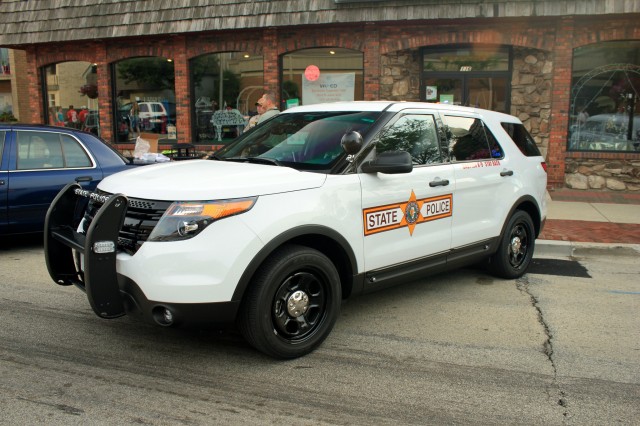

Looks like Illinoisans got some pretty important news this weekend. Thanks to freelancer Scott Ainsile, the state of Illinois is now aware that Illinois State Police have been capable of tracking one’s phone location, text messages, and calls without using a warrant since 2008. In fact, the information reported by Scot Ainsile shows that none of this imperative information was disclosed publicly or broadcasted anywhere in Illinois. Isn’t the State of Illinois over stepping their boundaries? Federally funded technology such as the Stingray isn’t just a problem in Illinois, it is a problem in many states, yet this info isn’t being disclosed publicly. Ever since the Patriot Act, Americans’ data has become less private; especially via our law officials who abuse this power. Check out the excerpt below to view the current unfolding of this new developing story.
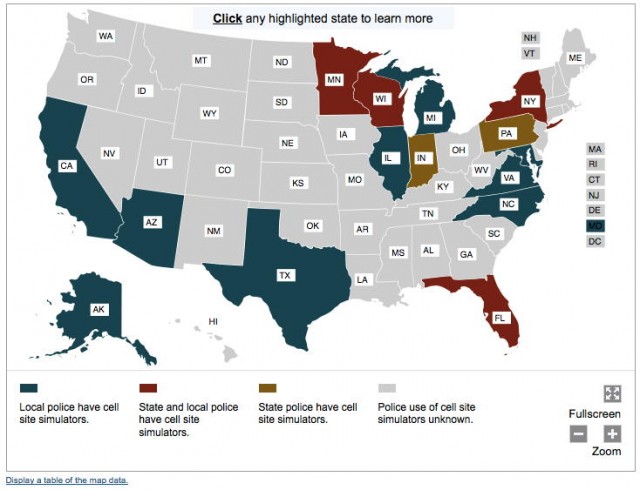
[Ars Technica Excerpt]
–“The 110-page set of documents represents yet another puzzle piece in the slowly emerging national picture of how such devices are acquired and used.
The document set also indicates that the Illinois governor’s office signed off on the equipment purchase and authorized an exemption from the “competitive bid process.” It includes a rarely seen Harris contract that uses language meant to keep the stingray purchase quiet. The documents, which cover a period between 2008 and 2012, were obtained through a public records request and were first publishedearlier this week by Scott Ainsile, a freelance “data pilgrim” based in the United Kingdom, with help from Heather Akers-Healy.
Also earlier this week, the American Civil Liberties Unionobtained e-mails from the Sarasota, Florida Police Department saying that it had outright lied on police reports and depositions about the use of the devices. The agency said instead that location information obtained from its stingrays had come from fictitious “confidential sources.” (This tactic is not terribly unlike the totally made-up “Fuzzy Dunlop” (video) informant from the TV show The Wire, which turned out to be simply a microphone tucked inside a well-placed tennis ball.)
Neither the Illinois State Police nor the Harris Corporation immediately responded to Ars’ request for comment.
In a March 18, 2008 letter sent from William J. Quinlan, the governor’s general counsel to Larry Trent, the director of the Illinois State Police, Quinlan authorized the Illinois State Police’s purchase of the devices “for conducting covert investigations.”
“This exception is requested so that the Illinois State Police may purchase components directly from the vendor and decrease the possibility of sensitive information being disseminated inappropriately,” he wrote. “The purchase of this specialized equipment will enhance the capabilities of the [REDACTED] when responding to a request for assistance from law enforcement throughout Illinois.”
What began as request for info on cell tracking records turns into surreal tale.
He also noted that this purchase was funded by a Department of Homeland Security grant.
In a subsequent letter from Trent to Purchasing Officer Marty Kuhn, the Illinois State Police department was “exempted from the Procurement Business Case process and the competitive bid process.” In other words, the agency could purchase from Harris without soliciting bids from other vendors. The governor’s office also did not immediately respond to Ars’ request for comment.
An invoice dated July 22, 2008 shows that the state spent $254,260 to acquire several items, each of which was redacted on the invoice. Documents from later in 2008 show that the Illinois State Police also spent over $7,000 to send four named special agents to Harris Corporation headquarters in Florida to attend a “seven-day training class on newly acquired cellular telephone tracking equipment.”—
Do you think this issue will ever be resolved or do you think it will continue? As an American citizen it’s crazy to view how much of our personal lives can be watched and prosecuted upon despite us (American citizens) even having any recollection of the technology that is capable of prosecuting them.
 Product Of Society