
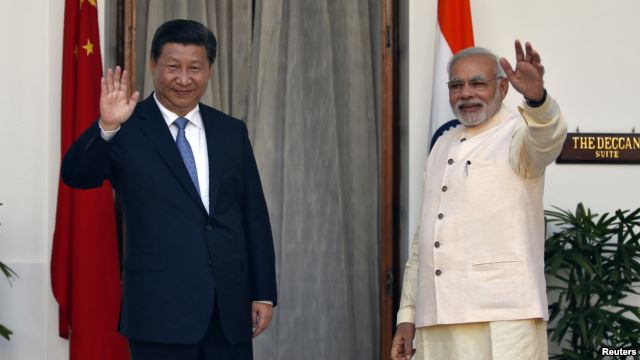
Chinese President Xi Jinping & Prime Minister Narenda Modi have chosen to set their differences aside for the sake of compromise. A few days ago, the two leaders signed over a dozen agreements that will allow China to invest well over $20 Billion dollars into India’s infrastructure which will include further development towards India’s railway system’s, aircraft leasing, telecoms, and new industrial parks in various parts of the country. In turn, this will grant China even more access in the Indian market towards various goods like produce & pharmaceutical drugs.
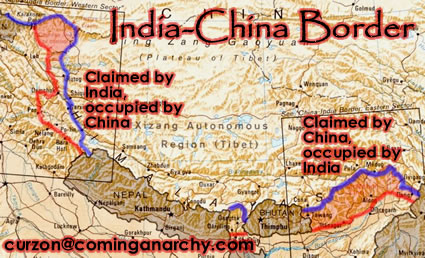
This agreement also discussed cooperative partnerships on space exploration & civil nuclear energy. Upon forming this agreement, only entity that possibly could’ve disrupted this deal was that the two countries have been at odds for 100 years.
In 1914, India’s former colonial power Britain, made an agreement with Tibet in making the McMahon Line the border between China & India. However, China never approved of this agreement. In effect, this has caused a back & forth problem between two countries claiming different areas as their own. Although this “Disagreement” on land has not led to any violence, its safe to say that it’s prevented these two powerful countries from business deals such as one that was made this week.
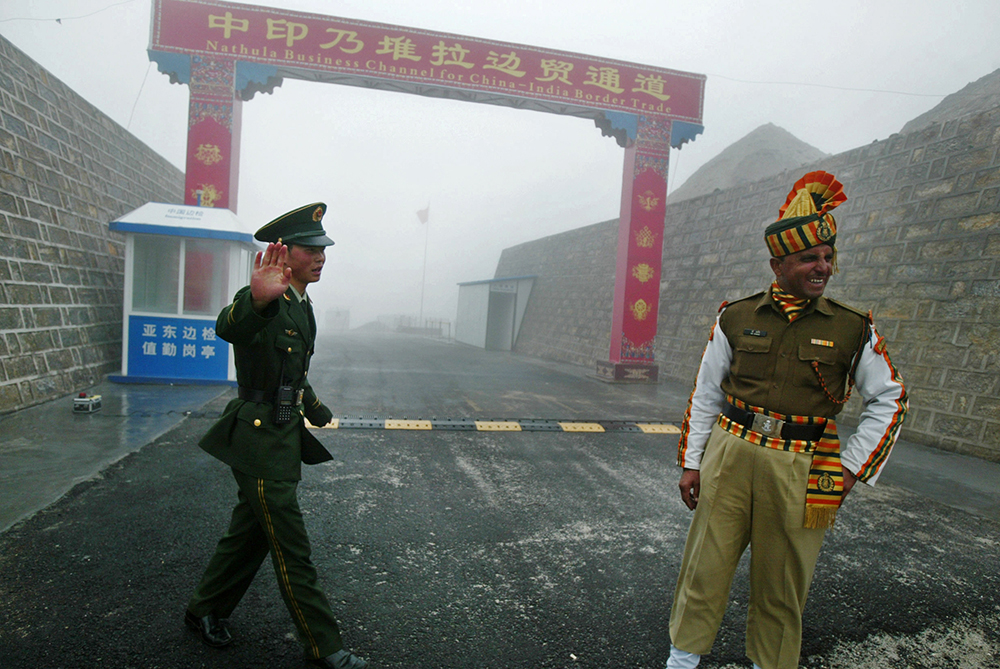
This is a big move for China because India has steadily grown in the past decade as one of the fastest growing economies in the world and has become more industrialized despite the large amount of problems that have held the country back like poverty, and terrorism. India is also the second most populated country in the world with over 1 Billion people. And they just so happen to reside right next to the most populated country in the world, China. The vast number of people makes this deal so significant, if these two major countries were to successfully work together they would make over 35% of the worlds population. That is a lot of potential buying power, one that Xin Jinping understands clearly.
Had the Chinese President not been able to reach a deal with India, we would have to hypothesize that the U.S. would’ve sought out some type of agreement given the potential growth a country like India now possesses.
– JRC
 Product Of Society